Where to actually snorkel at Hanalei Bay
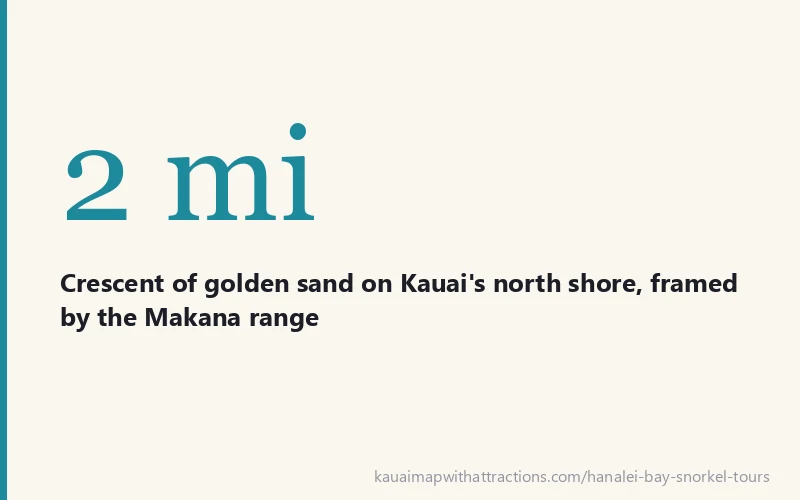
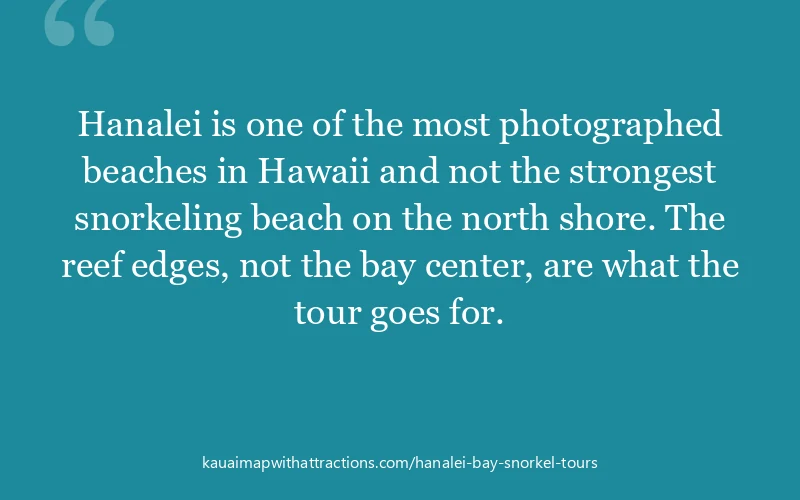
Hanalei Bay is a 2-mile crescent of golden sand on Kauai’s north shore, framed by the Makana mountain range. It is one of the most photographed beaches in Hawaii. It is also, somewhat counterintuitively, not the strongest snorkeling beach on the north shore. The bay floor is sandy, the visibility is moderate, and the truly reef-rich snorkeling spots are just outside the bay (Anini and Tunnels Beach) or further west (Ke’e on a calm day).
What “Hanalei Bay snorkel tour” actually means in practice on Viator is one of two things: a kayak-and-snorkel paddle out to the river-mouth and reef edges (May through September only, when the swell is calm), or a guided morning snorkel from Hanalei pier with a small-boat lift to the better north-shore reefs. The first format paddles you to Tunnels Reef or the river mouth; the second motors you out faster and lets you stay longer in the water.
The structural fact that drives every Hanalei snorkel decision: summer (May to September) is the only season when north-shore snorkeling is a daily-go. The winter trade-wind swell averages 8-15 feet on the north shore from October through April, occasionally peaking at 20+. Surf fans love it; snorkelers do not. By April the swell drops; by May the operators are back to a full daily schedule.
Two formats: kayak-and-snorkel or boat-and-snorkel
The two dominant Hanalei-anchored snorkel tour formats:
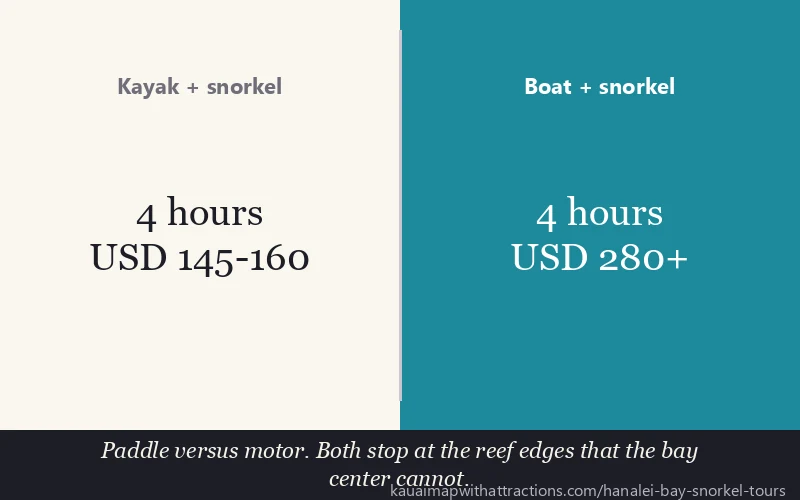
- Hanalei Bay Morning Kayak and Snorkel Tour (and similar variations). 4 hours, USD 145-160. Paddle from Black Pot Beach (the river mouth at the east end of the bay) along the bay coast and out toward the reef edge. The operator provides snorkel gear, dry bags, water, and a guide who picks the day’s reef stop based on conditions. Best for travelers who want to combine paddling with the snorkel.
- Private Whale Watch and Snorkel off Kauai’s North Shore (winter season). 4 hours, USD 280+. Small-boat charter from Anini or Hanalei depending on the day; in whale season (December-March) the operators add humpback observation to the itinerary. Snorkel stops are at the calmer side of the bay or whatever north-shore spot has the best conditions that morning.
A third format worth knowing: Hanalei River Paddle and Bay Snorkel Tour with Lunch (4-5h, USD 155). Half is on the calm Hanalei River (suitable for less-confident paddlers, kids), half ventures into the bay for a brief snorkel. Best for families.
What you do NOT typically book through Viator: a self-guided “rent gear at the beach” walk-in. Beach kiosks at Hanalei Pier rent fins and masks for USD 15-25 a half-day; there is no organized boat or kayak transport from those rentals. If your trip is short and you just want a quick beach snorkel, walk-in rentals are fine; tours are for the deeper-water, reef-edge, guided-pick experience.
When to book and what conditions to watch
The 24-48 hours before your tour matters more than what month you’re in. Operators check three signals:
- Surf height (NOAA / NWS Hanalei buoy). Above 4-5 feet on the north-shore reading, ocean operations may be canceled. Paddling beginners struggle with surf entry; advanced paddlers tolerate up to 6-8 feet but the snorkel itself is impractical at that point.
- Trade-wind speed. Above 18-20 knots, the bay gets choppy; tour visibility drops. Some operators still run; the experience suffers.
- Recent rainfall. Heavy rain on the Hanalei watershed flushes red mud into the river mouth; the bay’s east side turns brown for 24-48 hours. Snorkelers move to the western side (Tunnels Reef, Anini) when this happens.
Most Hanalei tours operate before 10 a.m. for two reasons: morning trade winds are calmest, and the reef visibility is best when the sun is high enough to penetrate but the wind hasn’t churned the surface. If your tour is afternoon-only, ask why; it might be the operator’s only available slot, or it might be a structural compromise.
The Hanalei area is gated by Haena State Park reservations at the far west end where the road dead-ends (Tunnels Beach, Ke’e Beach). If your snorkel tour ends at one of those beaches, the operator handles the reservation; if not, your access stops at Hanalei pier. Most kayak tours start and end at Hanalei or just east; they don’t need a Haena permit.
What “snorkel-friendly Kauai” actually means here
If snorkeling is your single must-do on Kauai, three things help:
- Plan the trip for May to September. Summer flat seas open up the north shore. October through April you can still snorkel, but you’ll be doing it on the south shore (Poipu) or the calmer east-side spots, not Hanalei.
- Build flexibility into the day-of. The condition signals above mean tours sometimes scrub same-day. Keep a backup plan (the Wailua River, a Waimea Canyon driving tour, or a Spouting Horn-Allerton south-side loop) so a weather scrub doesn’t waste the morning.
- Match your level to the tour. Kayak-and-snorkel needs basic paddle confidence (tour operators give brief instruction; first-time paddlers complete the tours fine but get tired quickly). Boat-and-snorkel needs no paddling. The river paddle is the lowest-skill option of the three.
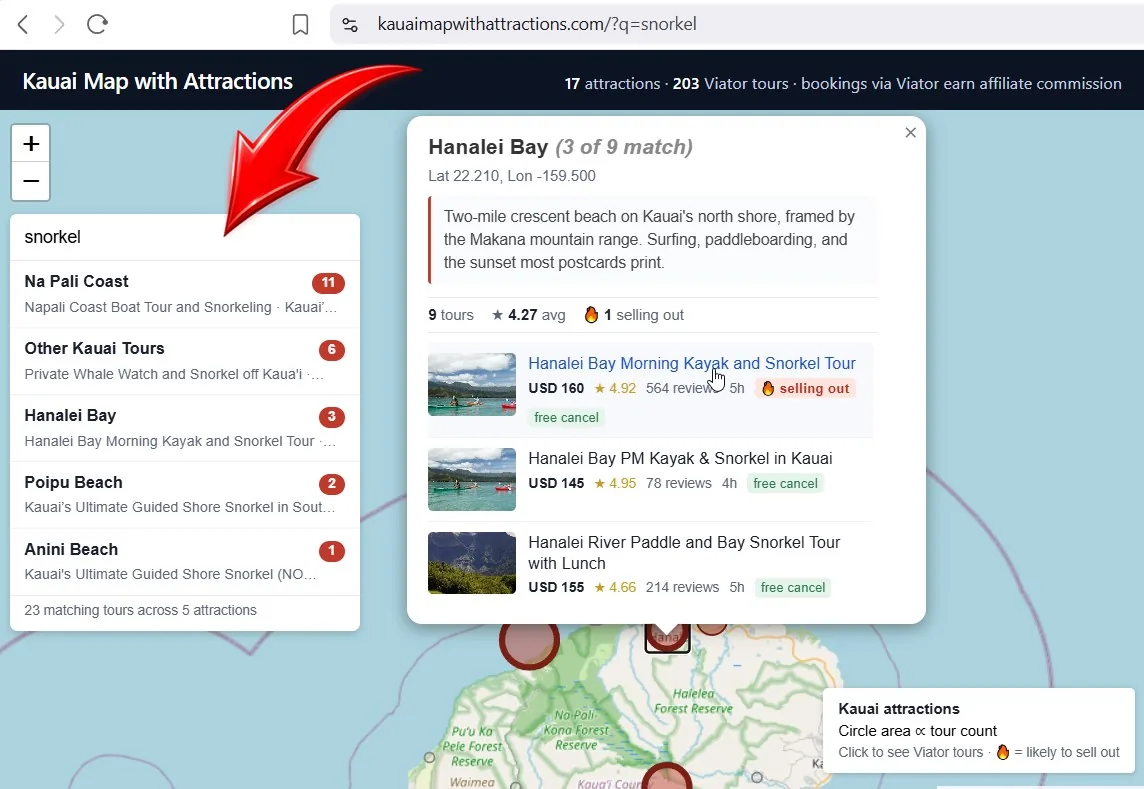
Ratings on Hanalei Bay Viator products run high: the average is 4.27 stars across the 9 mapped tours, with the morning kayak-and-snorkel format reaching 4.92. A common review pattern: travelers expecting Hanalei to be a Cancun-grade reef are mildly disappointed; travelers who treat Hanalei as a place to paddle through gorgeous scenery and snorkel a moderate reef are uniformly happy.
Things first-time visitors get caught by
The bay’s east end is muddy. The river mouth drains the Hanalei watershed; after rain, the east-end water turns reddish-brown. Snorkel tours move to the west side or out to the open reef when this happens. Don’t judge the bay’s clarity by the river-mouth photo.
Winter is for surfing, not snorkeling. The same waves that draw Hanalei Bay’s January surf community shut down the snorkel operators. If you book a snorkel tour for January-March, your tour either (a) gets canceled, (b) repurposes to a south-shore Poipu trip with the operator handling transport, or (c) runs anyway in marginal conditions. Read the operator’s cancellation policy.
Whale season ends before swell-flat season starts. Humpback whale-watching peaks January-March. Snorkel-friendly seas start in May. The overlap is small; April is shoulder for both. If both whales and snorkel matter, two trips are honest.
Sunscreen rules. Hawaii bans oxybenzone and octinoxate in sunscreens (since 2021); operators may also ban additional ingredients on their tours. Reef-safe mineral sunscreens (zinc oxide, titanium dioxide) are standard. Tours sometimes provide reef-safe sunscreen on board; bring your own to be sure.
Sources
- NOAA / National Weather Service Hanalei Bay buoy data (24-hour and 7-day swell history).
- Hawaii State Parks: Hanalei Bay (free public access; the bay is not gated by reservation, only the further-west Haena State Park trailheads are).
- US Geological Survey: Hanalei watershed bathymetry and river-mouth sediment patterns.
- Hawaii Department of Land and Natural Resources: humpback whale viewing season for the north Kauai coast.
- Operator-published condition policies cross-referenced via the Viator listings on this map.